Most homeowners remember the moment water appeared: the cracked supply line, the overflowing tub, the basement window that gave way during a storm. Fewer think about the hours and days that follow, when the outcome is largely decided. The visible water is often the smaller problem. What remains inside walls, under flooring, and in the framing determines whether a home returns to normal in weeks or develops lasting damage over months.
Water mitigation is the process of stopping further loss, removing water, and drying the structure before materials fail. In Boulder, where homes range from 1950s ranch houses with unfinished basements to newer foothill residences built into slopes, the work also depends on local conditions such as snowmelt, intense storms, and older plumbing. Understanding the sequence of decisions helps homeowners make better choices, whether they are handling the first call themselves or reviewing a proposal from Water Mitigation Boulder contractors.
Speed matters because of what happens inside materials, not because of an arbitrary urgency rule. When a contractor like Restoration Logistics Boulder is called for a water event, the first objective is to interrupt the sequence of moisture migration before it spreads into concealed areas. Reaching that point depends heavily on what happens in the first two days.
Why the First 48 Hours Shape the Outcome of Water Damage
Moisture trapped in building materials causes more long-term harm than the water that was initially visible. Drywall, wood framing, subflooring, and insulation absorb water through capillary action and fiber swelling. Once absorbed, that water can travel upward through drywall, a process known as wicking, and spread laterally into areas no one can see from the floor. A wet wall cavity may look normal for days while the bottom plate, sill, or subfloor continues to hold moisture.
Timing affects each category of damage differently:
- Mold growth: Many common indoor molds can begin colonizing wet organic materials within roughly 24 to 48 hours, particularly paper facings on drywall, carpet pad, and wood. The IICRC S520 standard for mold remediation treats prompt drying as the most effective control.
- Subfloor swelling: Plywood and oriented strand board (OSB) swell at the edges and seams when saturated. Swelling can be permanent, creating ridges that telegraph through finished flooring even after the subfloor dries.
- Drywall wicking: Water rising from the bottom of a wall can leave tide lines and crumbling gypsum at the base, often several inches above the visible pool.
- Finish damage: Hardwood cupping, laminate delamination, and paint blistering may develop as materials absorb and release moisture unevenly.
Homeowners can take several safe steps before a mitigation crew arrives:
- Shut off the water source at the fixture valve or the main shutoff, and know where that main valve is located.
- Turn off power to affected areas at the breaker if it can be done without standing in water. If water reaches outlets, appliances, or the panel, call the utility or an electrician before entering.
- Photograph and video all damage, including the source, standing water depth, and affected contents, before moving anything.
- Remove valuables and documents from wet areas, and move dry furniture onto plastic or aluminum foil to limit wicking.
- Avoid wet carpet and drywall being walked on, and keep children and pets out of affected rooms.
Clean, Gray, or Black: How Water Source Changes the Response
Water classification is the framework that determines how a restoration team cleans, what personal protective equipment (PPE) it uses, and which materials must be removed. The IICRC S500 standard for water damage restoration defines three categories:
- Category 1 (clean water): Originates from a sanitary source, such as a supply line, a faucet overflow, or a melting ice maker line.
- Category 2 (gray water): Contains significant contamination and may cause illness if ingested. Examples include dishwasher or washing machine discharge and overflow from toilets with urine but no feces.
- Category 3 (black water): Grossly contaminated, such as sewage, floodwater from rivers or stormwater, or any water contacting pathogens.
Clean water does not stay clean. Once it contacts building materials, dirt, or microbes, its classification can shift upward. A supply-line leak that soaks carpet and pad for several days may be treated as Category 2 by the time mitigation begins, because the absorbed water has picked up bacteria and organic material. This is why classification is reassessed throughout the job and why extended delays can increase material removal costs.
Tap water in Boulder is treated by the City of Boulder utility before reaching homes, and it meets federal Safe Drinking Water Act standards under EPA oversight. For a home, that means water from a supply line or fixture is normally Category 1 at the source. However, water quality reports, treatment details, and service conditions can change, so homeowners should confirm current information directly with the City of Boulder water utility rather than assuming. The utility can also explain whether a boil-water notice or service disruption affects a given area.
The risk changes significantly when water comes from outside the supply system. Sewage backup, toilet overflows containing waste, and floodwater from creeks or street runoff should be treated as Category 3 regardless of how clean the water looks. Boulder’s creek corridors and heavy storm runoff make this distinction relevant after large rain events. In those cases, technicians use respirators, nitrile or chemical-resistant gloves, eye protection, and disposable coveralls consistent with OSHA guidance on PPE under 29 CFR 1910.132, and they typically remove porous materials such as carpet, pad, insulation, and drywall rather than attempting to clean them.
Inside a Mitigation Job: Drying, Monitoring, and Documentation
Removing Standing Water and Contents
Extraction is the first physical step. Technicians use truck-mounted or portable extractors to remove standing water from floors, carpet, and pad, then move to the structure itself. Extraction typically covers carpeting, padding, and any area where water has pooled. Technicians also move furniture, lift baseboards where needed, and pull up carpet to access subfloor and pad, which may need removal if it has been saturated for a long period.
Contents handling follows a similar logic. Personal items may be inventoried, cleaned, dried, or packed out for off-site restoration, depending on their material and how long they were wet. Paper, upholstered furniture, and particleboard furniture are often difficult to save after prolonged exposure. Solid wood, metal, glass, and sealed plastic items frequently survive when cleaned promptly.
Salvageability depends on material type and exposure duration. Generally:
- Often salvageable: Solid wood furniture, ceramic tile, sealed concrete, metal fixtures, and framing lumber that dries to target moisture levels.
- Often requiring removal: Wet carpet and pad (particularly after Category 2 or 3 exposure), insulation, particleboard, paper-faced drywall with wicking above the cut line, and subflooring that has delaminated.
Drying and Monitoring the Structure
Drying is measured, not estimated. Technicians use pin-type and pinless moisture meters to read material moisture content, along with thermo-hygrometers to measure air temperature and relative humidity. Atmospheric conditions are often expressed as grains per pound (GPP), which indicates the moisture content of the air. Readings are compared against an unaffected reference material in the same home, such as an interior wall far from the loss, to establish a dry standard.
Air movers and dehumidifiers are placed according to the affected area, material types, and drying class. The IICRC S500 standard classifies losses from Class 1 (least water absorption) to Class 4 (specialty drying, such as hardwood or plaster systems with deep moisture). Equipment is repositioned as conditions change, and readings are logged over several days. Wood framing and subfloors often take longer to reach target levels than surface materials, and the readings may reveal moisture migrating into areas that initially appeared unaffected.
Drying is complete when readings reach target levels, not when surfaces feel dry. A subfloor may feel dry on the surface while the interior of the board still holds excess moisture. Crews should be able to show the numbers that justify removing equipment.
Recording Conditions for Insurance and Repairs
Documentation serves insurers, contractors, and homeowners. A typical job file includes:
- Photos: Before-and-after images of the source, each affected room, moisture readings on meters, and equipment placement. Wide shots establish location, and close-ups show specific damage.
- Moisture logs: Daily readings for each monitored point, along with ambient temperature, relative humidity, and GPP. Logs show the drying curve and justify equipment duration.
- Equipment records: Placement maps and daily run times for air movers and dehumidifiers, which together document the scope of drying.
- Scope of work and water category notes: Explaining what was removed, why, and what classification was assigned.
Thorough records support claims because they show the loss was mitigated promptly and that decisions were based on measurable conditions. They also help repair contractors plan the rebuild: a moisture map identifies which walls and floors need replacement and which can be cleaned and dried in place.
What Shapes Mitigation Costs and How Insurance Fits In
Mitigation costs vary widely because they depend on scope rather than a standard rate. Industry estimates for residential water mitigation often range from roughly a few thousand dollars for a small, clean-water loss to well above ten thousand dollars for larger or contaminated losses. Actual figures depend on local labor rates and the factors below:
- Affected square footage: More area requires more extraction, more equipment, and more monitoring.
- Water category: Category 2 and 3 losses require PPE, antimicrobial treatment, and removal of porous materials, which raises costs.
- Materials involved: Hardwood, plaster, and multiple layers of flooring typically take longer to dry and may need specialty equipment.
- Equipment duration: Drying often runs several days, and costs accumulate with each day of equipment use.
- Access difficulty: Crawl spaces, tight basement stairwells, and second-story losses add labor time.
An itemized estimate is more useful than a single flat number. It separates extraction, equipment, labor, removal, antimicrobial application, monitoring, and documentation, so homeowners can see what each line item covers and compare proposals on equal terms.
Homeowner policies often distinguish between sudden and accidental discharge, such as a burst pipe, and gradual damage, such as a slow leak under a sink that has been ongoing for months. Sudden losses are more commonly covered, while gradual damage may be excluded, particularly if the homeowner did not repair the leak promptly. Prompt reporting matters because most policies require notice within a reasonable time and expect the insured to take steps to prevent further damage.
Useful questions to ask an insurer include:
- What is my deductible, and does it apply per occurrence or per category of loss?
- What are the coverage limits for water mitigation, contents, and additional living expenses?
- Does the policy require using a preferred or approved vendor, and what happens if I choose another company?
- How does the policy treat gradual leaks, sewer backup, and flood damage? Flood coverage is usually a separate policy.
- What documentation does the insurer require, and will it accept the mitigation company’s moisture logs and photos?
Boulder’s Local Water Risks and How Homeowners Can Prepare
Boulder’s terrain shapes its water risks. Spring snowmelt from the foothills and the Front Range can raise creek levels and saturate soil quickly. Heavy summer thunderstorms can overwhelm storm drains and send runoff down slopes toward low-lying homes. Homes built on or near hillsides may experience subsurface water moving toward foundations, particularly where drainage is poor. Many Front Range soils also contain expansive clay, which swells when wet and can stress foundations and basement walls.
Older basements, crawl spaces, and finished lower levels are common points of vulnerability. Pre-1970s homes may have clay or cast-iron drain lines prone to cracking, limited foundation waterproofing, and unsealed crawl spaces that trap moisture. Finished basements are a particular concern because water that enters behind drywall or under carpet can remain hidden for long periods. If a home was built before 1978, renovations that disturb painted surfaces may also trigger EPA Renovation, Repair, and Painting (RRP) rule requirements, which affect how contractors handle lead-based paint during repairs.
Winter introduces freeze-related failures. When temperatures drop below freezing, water in exposed or poorly insulated pipes can expand and split pipe walls, often discovered only when the pipe thaws. Practical steps include:
- Insulate pipes in unheated areas such as garages, crawl spaces, and exterior walls.
- Keep the thermostat at or above roughly 55°F when the home is unoccupied, particularly during cold snaps.
- Open cabinet doors under sinks on exterior walls to allow warm air to circulate.
- Let faucets drip during extreme cold to reduce pressure buildup in lines.
Preventive habits reduce the likelihood of a loss in the first place:
- Test the sump pump by pouring water into the pit, and confirm the discharge line is clear and extends away from the foundation.
- Clear gutters and downspouts before spring and after autumn leaf fall, and make sure downspouts direct water at least several feet from the house.
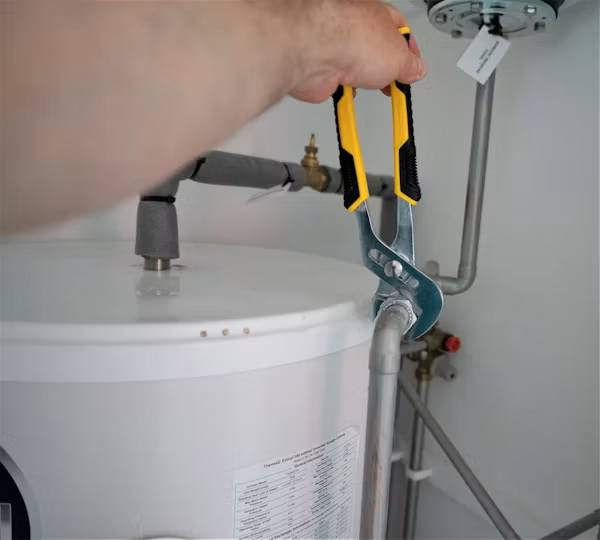
- Inspect the water heater annually for corrosion, sediment buildup, and leaks at the tank base or temperature-pressure relief valve.
- Locate the main shutoff valve, label it, and confirm it turns freely before an emergency.
Preparation does not eliminate risk, but it shortens the time between a water event and the first effective response. In a region where sudden storms and seasonal melt are predictable, that interval often determines whether a loss stays contained or spreads.